Imagine, only as a thought experiment, that an archive can preserve one memory exactly as you experienced it. The memory will not fade, borrow details from photographs, or change each time you revisit it.
The obvious choices are milestones: a graduation, a journey, a first meeting. Yet those days often leave behind pictures, witnesses, and stories told so many times that they acquire a durable public shape.
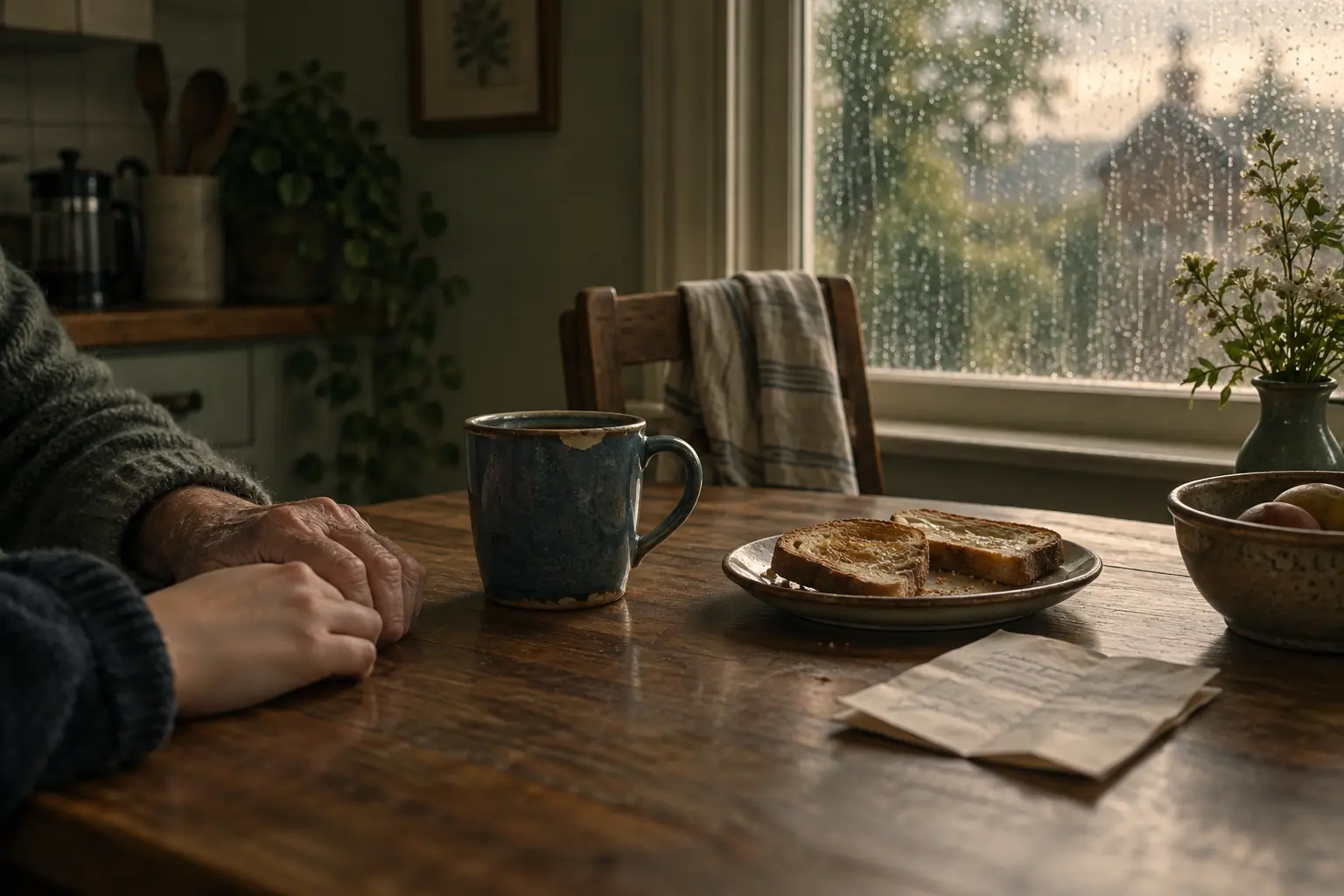
An ordinary memory is easier to lose. Consider a quiet breakfast on a rainy morning: a chipped blue mug, toast cooling on a plate, somebody's hand resting near yours. Nothing important happens. That may be precisely why nobody thinks to record it.
Why the ordinary can matter
Milestones tell us that a life changed. Ordinary moments show us what the life felt like before anyone knew it was changing.
Their value may come from texture rather than plot—the rhythm of a familiar voice, the light in a room, the ease of sharing silence. These details rarely survive in a calendar, but they can hold the shape of a relationship or a place.
Preservation has a cost, even in this invented archive. Choosing a memory can turn it into a monument. Replaying it may polish away the surrounding days and make one small moment carry more meaning than it originally did. The safest record might also become the least ordinary thing you own.
The question
Keep the answer ordinary and non-sensitive; no names or personal details are needed.
If you could preserve one ordinary memory without changing it, which moment would you choose—and what small detail makes it worth keeping?
Part of Beyond the Known, an independent journal by Arin Vale.
Continue with If memory changes, are you still you?
Read our editorial approach