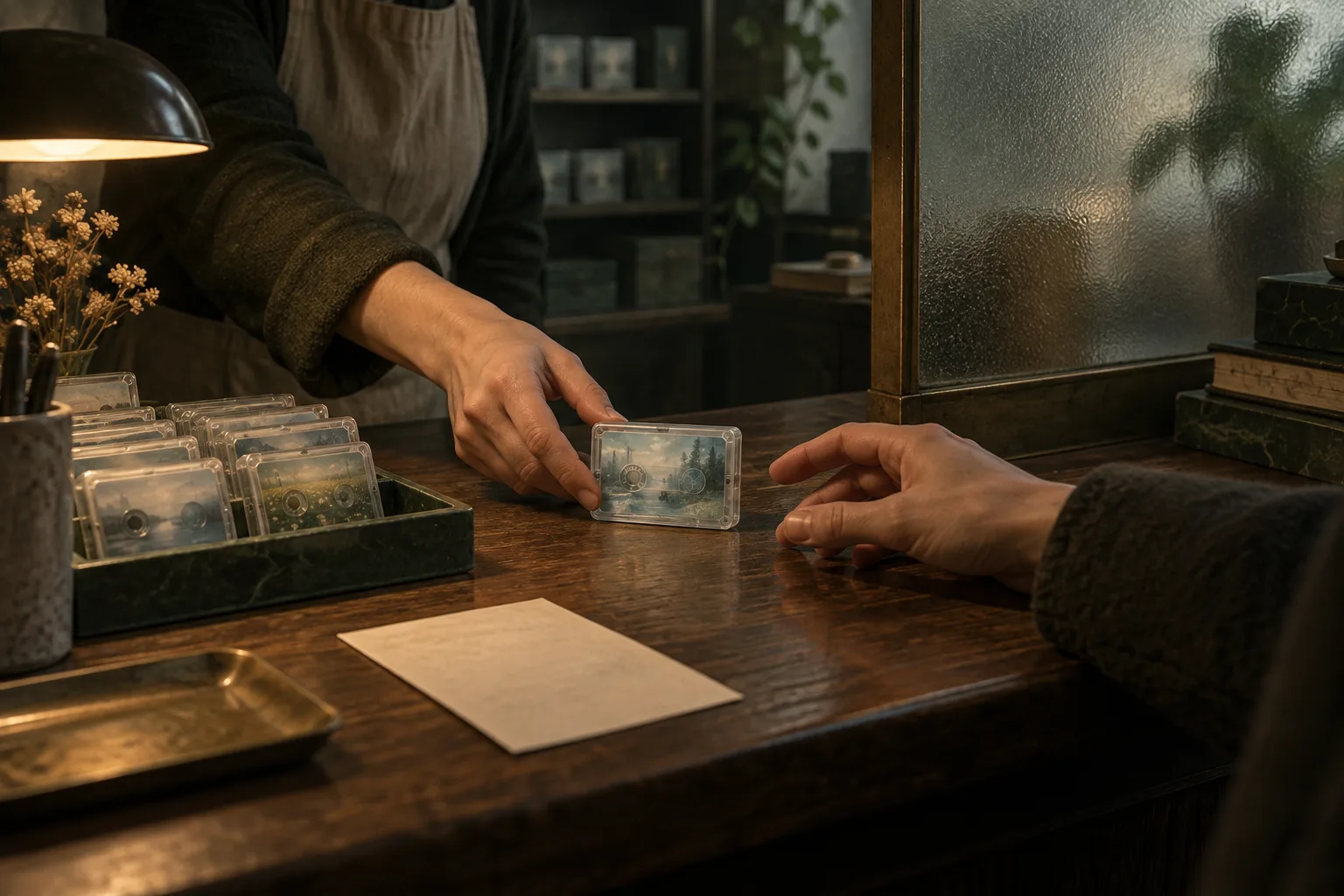
Imagine a shop that sells recorded memories. Not summaries or films, but experiences you can recall from the inside: the salt on a childhood beach, the nervous pause before an orchestra begins, the relief of finding someone you thought was lost.
A small label says each memory was donated with consent. You buy one called First Snow and leave able to remember red mittens you never wore. The experience is gentle, vivid, and emotionally convincing. Then you notice a woman in the memory asking not to be recorded.
The problem is no longer whether the memory feels authentic. It is whether the transaction deserves your trust.
Buying access is not buying the past
A market would be tempted to treat a memory like an object: one owner, one price, one transfer. But even a solitary recollection can contain other people. A birthday belongs partly to the child who remembers it, partly to the parent whose face appears in it, and partly to the sibling whose embarrassment becomes somebody else's entertainment.
The original rememberer might agree to sell. That does not settle what everyone else allowed. Consent would need to describe a use, not merely bless a file. A person might permit medical research but refuse entertainment, accept one private recipient but not unlimited copies, or allow the scene while asking that a particular voice be removed.
The more intimate the product, the less useful a single checkbox becomes.
Trust needs a history
Now suppose the shop removes the woman who objected. The edit protects her privacy, but it also changes the event. Did the seller remember the snow accurately? Was the warmth in the scene present at the time, added during restoration, or intensified because comforting memories sell better?
A trustworthy market would need provenance: who supplied the recording, what was altered, which permissions apply, and whether the experience has been copied again. That history would not prove that every detail was true. Human recollection can be sincere without being a perfect record. It would tell the buyer what kind of evidence they possess.
Without provenance, vividness becomes a dangerous substitute for reliability.
Can permission be withdrawn?
Consent also changes over time. A seller may agree at twenty and regret the decision at forty. If ten thousand customers already remember the scene, deletion cannot make them forget. A promise of complete reversal would therefore be dishonest inside this imagined system.
More credible rules could stop future sales, prevent new transfers, limit the licence to a fixed period, and preserve a tamper-resistant record of the withdrawal. These safeguards would not undo every consequence. They would at least avoid pretending that one impulsive decision grants permanent control to the market.
Price complicates the picture further. Someone facing eviction may sign a technically valid agreement to sell their happiest day. The signature matters, but so do the pressures that made the offer difficult to refuse.
The private test
The sharpest problem may arrive outside the shop. You tell a friend about the red mittens as if the memory were yours. Perhaps the experience has genuinely changed you. Perhaps you use it to understand a grief you never shared. The purchase need not be empty or corrupt.
But if a relationship depends on where that memory came from, hiding its source becomes a separate breach of trust. The issue is not that borrowed experience must always be announced. It is that intimacy can turn provenance into relevant information. A comforting feeling and an honest account of its origin are different goods.
A decent memory market would therefore need more than accurate playback. It would need specific permission, visible edit histories, limits on copying, realistic withdrawal rules, and protections for people who appear inside someone else's past. Even then, buyers would still face a personal question the receipt cannot answer: what do I owe another person when their experience begins to feel like mine?
The question is not only whether a purchased memory is real enough to feel. It is whether its journey into your life was honest enough to trust.
This essay uses an invented scenario to explore an idea. It is not a claim that the imagined technology exists, and it does not establish canon for Arin Vale’s forthcoming novel.
Part of Beyond the Known, an independent journal by Arin Vale.
Read The wrong memory — a story about borrowed recollection and imperfect provenance
Read our editorial approach