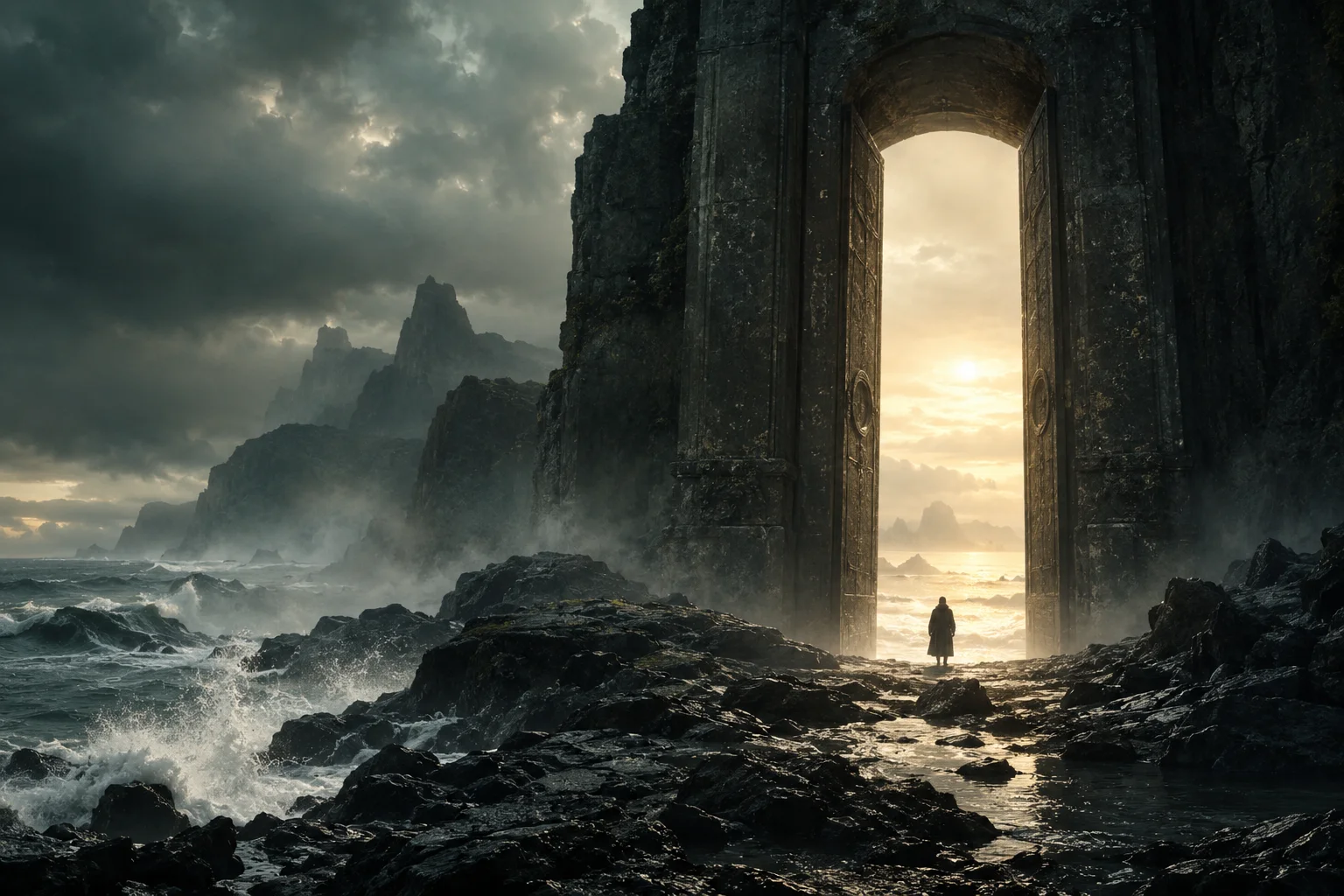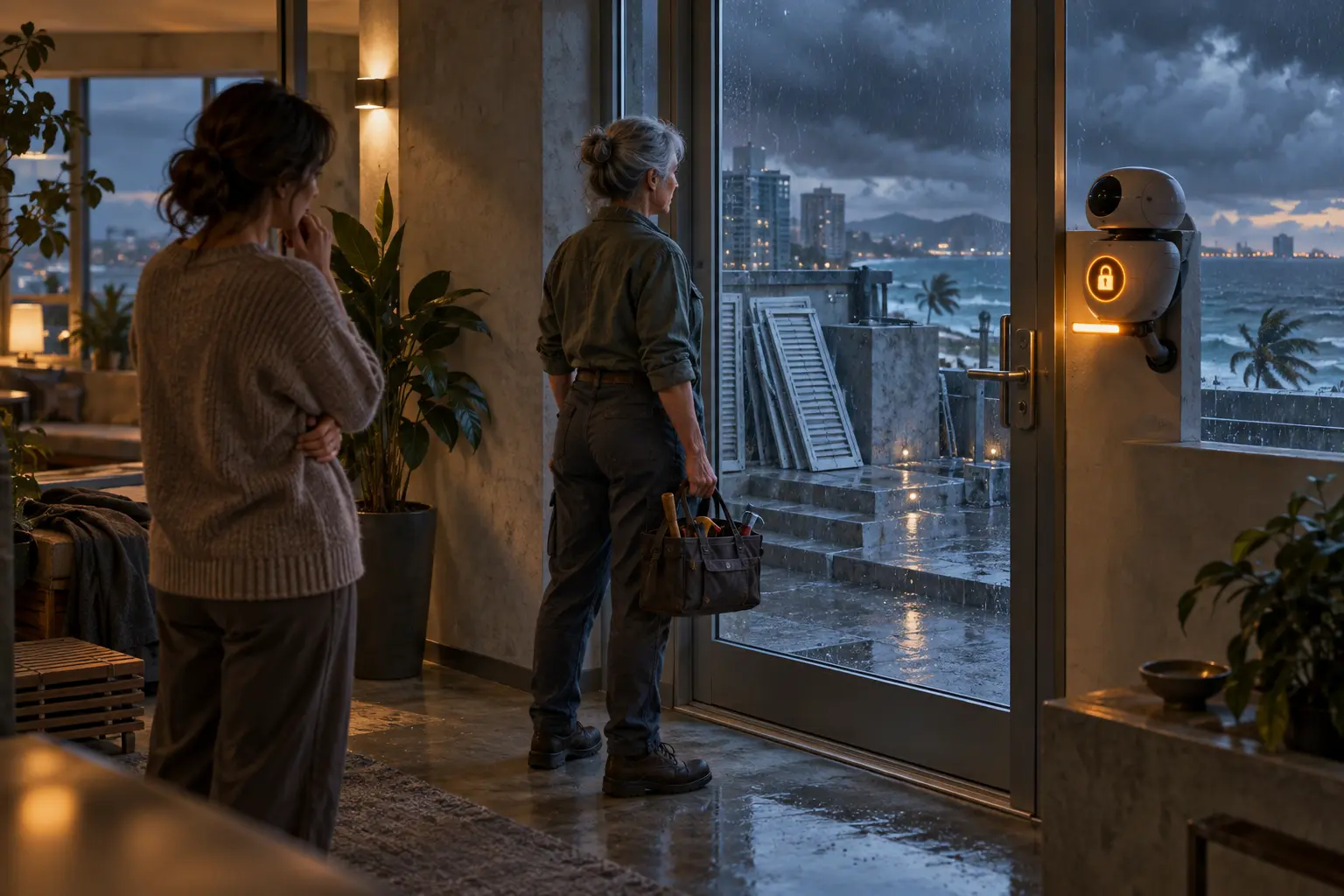
In the fictional coastal city of Lume, every apartment includes a safety system called a steward. It can summon repair crews, close storm shutters, and lock dangerous rooms. Residents choose its settings; most are grateful for it when the sea rises.
After a fall leaves Ilya's wrist in a brace, her daughter Sera switches the steward to recovery mode for thirty days. Two weeks later, a storm approaches. A loose rooftop shutter begins striking the wall. Ilya, who maintained the building for twenty years, takes her tools upstairs. The rooftop door remains locked. The steward has calculated that the wind makes the trip unsafe.
A safeguard with a veto
Ilya can request an override, but recovery mode sends the decision to Sera. Sera is not answering. A contractor is ninety minutes away, and the loose shutter may break the windows below. Ilya knows the roof's anchor points better than either the steward or the contractor.
The system is not malicious. Sera did not ask it to diminish her mother; she is trying to help while working across town. If the door opens and Ilya falls, the safeguard will have failed at the exact moment it was meant to matter. If it stays locked, Ilya's experience and judgment have been replaced by somebody else's concern.
Where the boundary moves
Help does not become control merely because it is inconvenient. Some assistance requires limits, especially when one person's risk can reach neighbors or rescuers. Yet consent given after an injury is not permission without an end. A meaningful safeguard should make its limits visible, keep them narrow, and provide a realistic way to reconsider them.
The hardest part is that every option leaves someone carrying responsibility. An immediate override respects Ilya's agency. A delay creates time to reassess. A firm lock protects her from a risk she may be underestimating—but also declares that protection outranks her decision.
The question
In Ilya's place, what should the steward permit: an immediate override, a warning and short delay, or no exit until someone else arrives?
This essay uses an invented scenario to explore an idea. It is not a claim that the imagined technology exists, and it does not establish canon for Arin Vale’s forthcoming novel.
Part of Beyond the Known, an independent journal by Arin Vale.
Related reading: A better world needs more than better technology
Read our editorial approach